The Laoag Clergy

NEW BLOGSITE!

Visit St. Anthony of Padua Parish, Marcos, Ilocos Norte.

The CHRONOS: Monthly Diocesan Schedule for FEBRUARY 2009

July 26: Laoag's foundation anniversary and St. Anne Parish fiesta

Today, the Diocese of Laoag celebrates her 48th birthday. Today, too, is the launching of activities in commemoration of the diocese's golden anniversary in 2011.

Let us pray for our diocese. Let us pray for the increase of faith and the deepening of love and commitment to God and the Church.

Happy fiesta to the Piddiguenos!

Click here to read CBCP news on the launching.

July 25: Fiesta greetings!

Today is the feast of St. James the Greater.

Happy fiesta to our brothers and sisters in Solsona and Pasuquin!

Cadaratan Church: A Miracle in Progress

Cadaratan Church: A Miracle in Progress


The Dream Church of Our Lady of Fatima Parish, Cadaratan, Bacarra, Ilocos Norte

The Dream Church of Our Lady of Fatima Parish, Cadaratan, Bacarra, Ilocos Norte

Foundation for the church-construction project in Cadaratan, Bacarra put up!

The construction of the OUR LADY OF FATIMA PARISH CHURCH started anew, September 8, the birthday of Mama Mary. Very crucial in this project is the financial consideration being tacked by the whole parish community. To address this concern, we, the Parish Pastoral and Finance Councils, together with our newly-appointed parish priest, Rev. Leonardo L. Ruiz, planned to put up a FOUNDATION for the continuation and completion of the construction of the parish church.

The Foundation is chaired by our beloved Bishop, Most Rev. Sergio L. Utleg, D.D. and the members of the Board include Victor R. Bolosan, M.D., Rosalina R. Javier, Flordelina T. Cadelina, Eugenia M. Mendoza, Emilia B. Agonoy and Dante Subia, all from Our Lady of Fatima Parish.

Registration of the Foundation with the Securities and Exchange Commission (SEC) is under way.

Architects and Engineer: Arch. Coleen Cajigal and Arch. Joemar Bolosan, Engr. Eduardo Cid.

FINANCIAL ASSISTANCE IS NEEDED. For those who wish to send their donations directly through the bank, this is our bank: PHILIPPINE NATIONAL BANK, Batac Branch, Batac, Ilocos Norte, Philippines. DOLLAR ACCOUNT NUMBER: 158881300038; Account Name, Most Rev. Sergio L. Utleg, D.D., Victor R. Bolosan, M.D. and Flordelina T. Cadelina. PESO CHECKING ACCOUNT: 158881300020, with the same above-mentioned account name.

The Happy Priests

The Happy Priests
The clergy during their annual retreat with Bp. Mylo Vergara of the Diocese of San Jose, Nueva Ecija as retreat master at Betania Retreat House in Baguio City, November 10-13

HELP BUILD THE CHURCHES OF OUR YOUNG PARISHES!

ST. JOHN BOSCO (BARESBES, DINGRAS)
ST. JOSEPH THE WORKER (CARASI)
ST. FRANCIS OF ASSISI (DAVILA, PASUQUIN)
OUR LADY OF FATIMA (CADARATAN, BACARRA)
ST. ROSE (STA. ROSA, SARRAT)

OUR MOTHER OF PERPETUAL HELP (PANCIAN, PAGUDPUD)

For financial assistance or donations in-kind, please contact the Bishop or the Curia at (077)770-5210, or Fr. Lorenzo Torreflores (Baresbes, Dingras) at 0917-5701085, Fr. Danny Devaras (Carasi) at 0920-5537806, Fr. Lester Menor (Davila, Pasuquin) at 0915-7879701, Fr. Leo Ruiz (Cadaratan, Bacarra) at (077)670-3801, and Fr. Anthony Dimagiba (Sta. Rosa, Sarrat) at (077)782-2031, Fr. Antonio Calautit, SVD (Pancian, Pagudpud) at 0918-5228902.


Listen to DZEA-CMN Radio Totoo, 909 khz!

Pray for your priests. They need your prayers as much as you need theirs.

Pray for your priests. They need your prayers as much as you need theirs.
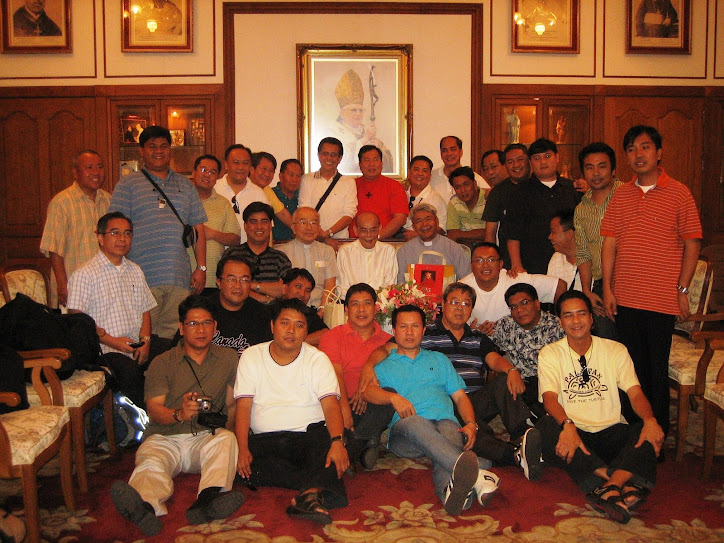
The clergy of Laoag with the lone cardinal of Thailand and the bishop of Changmai
Showing posts with label Reflections. Show all posts

When man becomes a god

You have made him little less than the angels,
and crowned him with honor and glory.
You have given him rule over the works of your hands,
putting all things under his feet.(Ps. 8,6-7)

Such is the dignity of man. To him is entrusted the care of creation, the expression of God’s love. And this free act of God of choosing man to be the steward of all his works is consequent upon his (man’s) being fashioned after the divine image and likeness.

God is omniscient. Sharing in God’s goodness, man is thus gifted with knowledge so that he may be able to accomplish the holy task of stewardship over creation. Nevertheless, he is not given to eat of the Tree of Knowledge (Gen. 2,9). He may taste of the fruit of any of the trees in the garden except of the fruit of the Tree of Knowledge in the middle (Cf.Gen 2,16). God does not let man eat of it by reason that it is the sort of fruit reserved only for God.

The knowledge which God gives man is more than adequate for him to carry out his task. Be that as it may, the prospect of becoming as God or as knowledgeable as he is (Cf. Gen. 3,6) intrigues him and appeals to him. But there is a sort of knowledge that only belongs to the economy of God. Now, man wants to cross the boundaries into the divine realm and mess with the affairs of God in the process. Quite unfortunately, he employs this knowledge not according to God’s designs but to his mere selfish follies.

With this sort of knowledge at his disposal, man, indeed, becomes a god . . yet without a heart, without compassion, without understanding, without respect for life – that singular gift of God. Yes, man as god loses the divine image and likeness.

It is very appalling how this godless god places his rule over the produce of God and puts life under his feet. Man tramples upon life as well as God's reproductive designs; life is reduced to a machine, a commodity, a toy on the hands of mindless minds and heartless hearts, a specimen on the laboratory table, a by-product of exploratory ventures, a mere deliverance of frail human choice.

O, when will man remember God and be truly man – again – and in prayerful admission, pronounce:

Truly you have formed my inmost being;
you knit me in my mother’s womb.
Nor was my frame unknown to you
when I was made in secret.
Your eyes have seen my actions;
in your book they are all written (Ps. 139,13.15a.16a) [?]


(by Fr. Tom Pascua)

Homily of Most Rev. Sergio Utleg, Bishop of Laoag, on the occasion of the Installation of Most Rev. Joseph Amangi Nacua as Bishop of Ilagan

Most Rev. Joseph Nacua, Bishop of Ilagan,
Most Rev. Archbishop Edward Joseph Adams, Apostolic Nuncio to the Philippines,
Most Rev. Archbishops and Bishops,
Rev. Fathers and Sisters,
Honorable Government Officials,
Ladies and Gentlemen:

Recordatus Misericordiae Suae, Ever Mindful of His Mercy. The motto in Bishop Nacua’s Coat of Arms reminds us that God has indeed shown his love and mercy for this Diocese. For the last 20 months, Ilagan had no bishop. But because of God’s mercy and providence, the Diocese remained alive, people have kept the faith, the clergy continued to serve the people of God. This is no reason, however, to say that a diocese is better off without a bishop. And the reason for this is, as the Directory for the Pastoral Ministry of Bishops, Apostolorum Successores, quoting Vatican II, puts it: the bishop is the visible source and foundation of the unity of the particular church.

Without a bishop there is no local church. In a diocese, there may be zealous priests busy with their work, the Gospel may continue to be preached eloquently, the diocesan programs may be efficiently implemented, but without a bishop the diocese will be unreconizable as a local church and will eventually disintegrate. That is why, we are doubly grateful to God for his infinite goodness and mercy, because he has finally provided the Diocese of Ilagan with its Pastor and Bishop.

To be a visible sign and guarantee of unity in the Church! What a terrifying idea! This is the reason for the exalted dignity, the over-arching power, the unprecedented prestige of the Bishop, all summed up in two words when he is addressed as: His Excellency! But I doubt if there is any man, who upon learning that he has been chosen by the Holy Father to be a bishop will not stand in fear and trembling at the thought of the heavy responsibility that he is about to bear on his frail shoulders.

The responsibility is tremendous because the Bishop is being asked to personify the Most Holy Trinity to his flock. The same document, Apostolorum Successores says: “through his life and episcopal ministry (the bishop) manifests to the people of God the Fatherhood of God… the loving care, mercy, gentleness and authority of Christ… and the vitality of the Holy Spirit who gives life to the Church and sustains her in her human weakness.” The bishop has to be a father, a brother, a shepherd, a manager, an inexhaustible source of hope, a guide, a rock of strength, a fountain of life. Who then can be worthy to be a bishop? Who can even aspire to be a good bishop? The answer is: nobody. Nobody because the bishop is expected to configure Christ, and nobody can ever be like Christ himself.

Yet, it is also true that our christian life is a mixture of what is human and what is divine, of body and spirit, of immanence and transcendence, of sinner and saint. The Church is a paradox, and no one has expressed this truth in a better way than Vatican II itself when it says about the church that it is: ecclesia sancta sed semper reformanda. The church is holy, but always in need of reform. It is as though the church and all of us who compose the church have been given two grades simultaneously: E and NI. E because we the church are excellent, holy, divine… but at the same time NI, needs improvement, because we are always making wrong choices, falling into arrogance, committing sin, breaking promises, and coming short of our goals.

When I was asked by Mons. Marino Gatan to be the homilist for this Mass, I was sure that I was chosen to do this difficult but privileged task not because of my profound insights on Ecclesiology and the nature of the Episcopacy but because, as the former bishop of this diocese, I would be in the best position to give advice to the new bishop.

And so my dear Bishop Nacua, I know that you have a Doctorate in Spirituality but since I am two years your senior in age, and eleven and a half years older than you in the episcopacy, allow me to give you some unsolicited advice. Bear in mind always that the life and mission of a bishop, as that of the Church herself, is a paradox.

 Paradox number one: power and servanthood. As a bishop you have almost absolute powers in the executive, legislative and judicial forum. Yet many times you will find yourself obeying and doing what others want and tell you to do. There is nothing strange about that. You are given power so that you will have greater capacity and freedom to serve.

 Paradox number two: readiness and preparation. There is no school that prepared you to be a bishop, yet you are expected to know what to do. After this installation, with the barest of instructions, you are thrown into the job in full gear. Yet there is so much for you to learn, and skills that you have to acquire and points of view that you have to be familiar with. But do not worry. By the grace of your ordination, the Holy Spirit will be there to help you. Apostolorum Successores says: As teacher of the faith, sanctifier and spiritual guide, the Bishop knows he can count on a special divine grace conferred upon him at his episcopal ordination.

 Paradox number three: grave responsibility and letting go. You are responsible for the growth of the church, the preaching of the Gospel, the harmony of all the different groups within the diocese. Yet sometimes you feel that things are happening, and many times doing well, without your knowledge or control. You get the feeling that things go on without you; they are, in fact, prospering not because of but in spite of you. This only tells you that what you are doing is really God’s work. You are there only as his instrument. You sow the seed but God makes the plant grow and bear fruit.

 Paradox number four: agony and ecstasy. Sometimes you will feel like you are in heaven because of the adulation of the flock and all your plans are flourishing and running smoothly; other times you feel you are at the fringes of hell because you are misunderstood, maligned and everything you say and do is wrong. The life of a bishop is sometimes colorful and exciting, but oftentimes it is grey and monotonous. Sometimes you want to shout to the whole world: God is good. Life is wonderful. At other times you are forced to say, as Jesus on the cross: My God, My God, why have you forsaken me. It is a life that is exhilarating and fulfilling, but at the same time it is demanding, exhausting and humiliating. But that is something that should not scare you or surprise you, because it is also the life of Jesus Christ, the Head and Shepherd of the Church, of whom you as Bishop is the struggling image.

 Paradox number five: losing and finding yourself. He who loses himself will find it, as Jesus says. People will want you to be this and to be that. Yes, you are supposed to lose yourself among your people, but paradoxically, the best way for you to do that, is just to be yourself. The world will want to carve you according to its image, but the most precious thing you can offer to the world is YOU.

I like your motto: ever mindful of his mercy. Had I known better, I might have adopted it for my own. As a bishop, like Christ, you will preach the good news to the poor, give sight to the blind, and set captives free; but your journey will be strewn with thorns, rocks, storms and sleepless nights. Be consoled that anything that happens to you will always be an act of God’s love for you. There will be times when you will find yourself floundering in a stormy sea with waves big enough to drown you. In the end, God’s mercy and compassion will be the only reality you can rely on and will ever need. May our good and merciful Lord be always with you.

Ilagan, September 9, 2008.

Ti Krus ket Bendision

"Ti agtarigagay a sumurot kaniak masapul nga ibaklayna ti krusna...”

Iti daytoy a gundaway malagipko ni Manny Pacquiao gapu ta sakbay ken tunggal rikos ti boksing, agtandaan. Adda met dagiti basketbolista ti PBA nga agtandaan sakbayda nga agay-ayam. Kasta met kadatayo, no lumabas ken umunegtayo iti simbaan, agtandaantayo met iti krus. Amin dagitoy ipakitada ti kinasiasinotayo - pasurotnatayo ti krus!

Agpayso unay, kakabsat, a ti Krus ti maysa kadagiti kapatgan a ramen ti biagtayo a Cristiano. Ti kinapudnona, maaw-awagantayo a relihion ti Krus agsipud ta ti tanda ti kina-Cristianotayo ket ti Krus.

Ti kinapudnona, idi nabuniagantayo kastoy ti kuna ti padi: “Felimon, iti nagan ti nacristianoan a gimong awatenka nga agpaay ken Cristo ket yugisko kenka ti tanda ti krus ni Cristo a nangisalakan kadatayo.” Naimaldit ngarud kadatayo ti tanda ti Krus manipud iti dayta a kanito. Manipud met laeng iti dayta a kanito, nagbalintayon a pasurot ti Krus. Isu't gapuna a no irugitayo a rambakan ti Nasantoan a Misa, agtandaantayo iti krus. Sakbay a mabasa ti evanjelio, agtandaantay manen, agsipud ta awan sabali a tanda wenno pagilasinan a Catolicotayo, no saan a ti Krus!

Ngem ti yanna a rigat, adu kadagiti Cristiano ti madi iti krus. Adu kadagiti Catolico ti agkedked a ma-addaan iti krus. Kayatda piman nga itarayan ti krus. Yes, we run away from danger because we must preserve ourselves, but we must not run away from the cross. The cross is not our danger, the cross is our salvation! We do not run away from the cross, we run away from sin. We do not run away from Jesus Christ, we run away from the evil one. Wen, itarayantayo ti peggad tapno mailisitayo iti didigra, ngem saan a rumbeng nga itarayantayo ti krus agsipud ta ti krus ti salakantayo! Ti basol ti rumbeng nga itarayantayo, saan ket a ti krus. Ni Satanas ti rumbeng nga itarayantayo, saan ket a ni Apo Jesus!

Laglagipentayo a no mangted man ti Apo iti pakarikutantayo, saan a gapu ta binaybay-annatayon, saan a gapu ta nalipatannatayon, saan a gapu ta tinallikudannatayon ken saan met a gapu ta naliwayannatayon, ngem gapu laeng iti ayatna nga iparaman kadatayo ti kapatgan a gamengna – ket daytoy awan sabali no di ti Krusna! We should, therefore, rejoice in the cross. Remember that in every blessing is a cross, and in every cross is a blessing!

Wen, kakabsat, tunggal mangbendision ti padi – adda latta ti krus. Awan ti bendision nga awan ti tanda ti krus. Isu a no malpas ti tunggal misa agtandaantayo iti krus, saanen a tapno iparangarantayo ti kinasiasinotayo ngem tapno mabendisionantayo. Gapuna a ti siasinoman a madi iti krus, awan met kalinteganna a mabendisionan!

Ibaklayyo ti krusyo, kakabsat. Wen, ibaklayyo ti krusyo ken dikay kad ibbatan lattan. Awitenyo ti krusyo ken dikay kad ibati lattan iti uray sadinoman. Awitenyo ti krusyo ken dikay kad satsaten lattan. Awitenyo ti krusyo ken dikay kad ipadpadawat lattan! (Fr. Walde Batoon)

Ti Krus ken ti Panagsagaba ti Tao

Ti balitok masapul a lumabas iti ingget pudot nga apoy tapno maikkat dagiti rugitna ket rumuar tay husto a sileng ken silapna. Ti bukel saan nga agrusing no saan a maitukit iti daga. Masursuro laeng ti maysa a maladaga ti magna kalpasan ti adu a daras a pannakatumbana. Ti maysa nga atleta dinto agballigi no saanna a kanayonen ti ehersisyona wenno ensayona. Ti kinasanto saan a magun-od iti apagdarikmat. Adu ti masapul nga isukom wenno tallikudam a naipakadawyan kenka. Ti kinasanto kaipapananna ti panangparparitmo ta bagim. “Ti agtarigagay a sumurot kaniak, masapul a tallikudanna ti bagina, ibaklayna ti krusna ket surotennak.”

Ngem no adda man maysa a banag nga ad-adaywan ti tao, isu ti panagrigat/panagsagaba/panagtuok/panagparikut. Kayattay amin ti nanam-ay a panagbiag, e.g. instant mami, instant coffee, remote control, cellphones, pasa-load. Para iti lubong, awan ti imbag ken pateg nga ited ti panagrigat. Tapno saan a masayang ti biagmo, masapul a mapadasam amin a pagragsakan. Out of place ti rigat. No adda mangkontra ti pagragsakam, kill joy. Bagtit ngarud ti tao nga okey lang no aglasat ti adu a rigat. Maag ngarud ti tao nga agtarigagay a sumurot ken Jesus a sibabaklay ti krusna.

No sumangbay dagiti bagyo ti panagbiag, mabalin a makunatayo no dadduma, “Pagayatan ti Dios daytoy.” Ipapaayna laeng dagiti maikari kadatayo gapu iti saan a nasayaat nga inar-aramidtayo. No ania ti immulam, isu met laeng ti aniem. No kastoy ti kapanunotantayo, nalaglag-an lang ti mangibaklay kadagiti rigattayo. Ngem kasano ngaruden no layusendatayo ti adu a problema idinto nga iti panagkunatayo, agbibiagtayo met nga addaan panagbuteng iti Dios ken panagraem iti padam a tao? Ania’t nagbalinan ti hustisya ti Dios?

Mabalin a no dadduma, ti pangrukodantayo no ay-ayatennatayo ti Dios wenno saan ket no nanam-aytayo wenno rigat la ti adda kadatayo. No nanam-ayka, pampanunotennaka ti Dios. No nakakaasi ti kasasaadmo, awan ti naganmo iti listaan ti Dios.

Ngem panagsagaba ti wagas ni Apo Dios tapno pabaroenna ti lubong, tapno sang-awanna ti lubong iti baro nga espiritu. Agpayso, addatayo ditoy lubong. Ngem saantayo a para iti lubong. Para kadatayo a mamati ken agtalek iti Dios, ti panagsagaba ti dalan nga agturong iti biag.

i. Ni Noah ken ti layus. Ti dakkel a layus ti wagas ti Dios tapno pabaroenna ti lubong.
ii. Ni Pedro maipanggep iti panagsagaba ni Apo Jesus
iii. Is. 55,8-9: "Ti panunotko saan a kas iti panunotyo, ket ti aramidko saan a kas kadagiti aramidyo. No kasano a nangatngato ti langit ngem ti daga, kasta met a nangatngato ti wagas ken panunotko ngen ti wagas ken panunotyo."

Saan a pagayatan ti Dios ti panagsagabatayo. Saan nga agragsak ti Dios a mangbuybuya kadatayo nga agsagsagaba. Numan pay kasta palubosanna daytoy tapno iti kasta mapakired ken mapauneg dagiti birtudestayo, nangnangruna ti panagitured ken panagibtur. Masursurotay pay ti mangaasi ti padatayo nga agrigrigat. No awan ti panagsagaba, saan nga adayo a malipantantay met nga ikkan ti importansya ti sumagmamano a banag, kas koma ti salun-at. No agsagaba ti maysa a tao, maipalagip kenkuana ti nakaayabanna, nga isu ti biag nga agnanayon (biag nga awan pagkuranganna). Ti lubong adda pagpatinggaanna, ket agdaldalyasattay laeng ditoy lubong. Silalagiptay ngad koma kadagiti ballaag ni Apo Jesus maipapan kadagiti kinabaknang ditoy lubong.

No adda sumangbay a pakatuokan, awatentay koma ngarud daytoy nga addaan pammati ken panagtalek iti Dios. “Dikay agdanag. Addaakto a kankanayon ta sibayyo.”

Babaen ti panagsagaba, babaen ti nasantoan a krus, insalakan ni Apo Jesus ti lubong. Ngarud, adda pateg ti panagsagaba. Adda ited a kinagasat dagiti pakarigatan ni biag. Dagiti nakapsut wenno awan ti talek ken pammatina iti Dios, dida maamiris daytoy. Uray ni Pedro, idi un-unana nakullaapan met dagiti matana iti daytoy a kinapudno. Iti gayam likudan ti krus ti pakasarakan ti biag. Saantay ngarud koma a mabuteng a mangsango kadagiti krus ti biag. Ni Apo Jesus a nagsagaba iti napalalo gapu kadatayo umaynatayo saranayen. (Fr. Tom)

Ti Maysa A Padi

Saanto a pulos maawanan ti lubong kadagiti tattao a pagragsakanda ti mangirurumen kadagiti papadi. No ti maysa a padi maitibkol ket maitublak, layusenda kadagiti pammabain ken dunorenda babaen ti panangang-angawda. Pagsiglatan ken paggugusto dagiti dadduma ti mangbirok kadagiti bambanag a makapasakit kenkuana. Adda pay dagitay saan nga agpangadua a mangpardaya kenkuana. Pagsasaritaanda dagiti sanikuana wenno dagiti bambanag a naipundarna, ket kunada a gamrud wenno agruprupat’ kuarta, numan pay masansan nga awan met nakappapati a mangpaneknek iti saoda, ket dida pay ipaay kenkuana tay maysa kadagiti kangrunaan a kalinteganna, ti kalintegan a mangdependar ti bagina kadagiti ibatbatoda a pammabasol kenkuana.

Ni Apo Padi saan a maysa nga anghel. Saan met a maysa a superhero. Tao laeng kas kadakayo. Adda dagiti pagriroanna, adda dagiti pagkapsutanna, ket no dadduma, maitikleb gapu iti kinarasina a kas tao. Ngem no iti tengnga iti rabii, no naimasen ti turog ti amin, adda awag a masapul a malanaan ti maysa a kabsat a masakit ken maisagana iti isasaklangna iti Dios a Namarsua, saanto nga agtaktak a mangpanaw tay naimeng ken natalged a silidna iti kumbento tapno idawdawatanna ken liwliwaenna dayta a kabsat, saan met a mapalakpakan. No agballasiw ti karayan, magna iti minilmilya, irisgona ti bagina iti nadumaduma a pagpeggadan tapno masarungkaranna dagiti tattao ti Dios ken maurnongna a mangrambak iti Nasantoan a Eukaristia, awan met maawatna a pammadayaw. No aramidenna ti kabaelanna tapno maiwanwanna a nasayaat ti eskuela, saan met a maukkoran iti medalya wenno maiyawatan ti tropeo ken plake. Ngem numan pay kasta, saan a birbiroken ni Apo Padi ti pannakaitan-okna ditoy rabaw ti daga.

Ni Apo Padi annugotenna ti saanna koma a pannakaikari nga agserbi iti Dios a kas padi ta nalawag kenkuana ken aklonenna ti kinakurapayna, ti kinababana, ti kinakapuyna, ti kinamanagbasolna. Ngem gapu iti ayat ken kaasina kadagiti tattaona, ti Dios mangawag kadagiti lallaki nga agserbi iti pannakaituloy ti makaisalakan a mision ni Apo Jesus a Cristo. Ngarud, ni Apo Padi napili nga agserbi iti Dios iti naisangsangayan a wagas, naisangsangayan isuna a sanikua ti Dios ken nasantoan a kalasugan ti parabur ken ayat ti Dios ditoy lubong.

Iti panagserbi ni Apo Padi, adu dagiti tinallikudan ken insukona. Insukona ti wayawayana a mangbangon ti bukodna a pamilya tapno siwawayayawaya nga agbalin a kameng dagiti adu a pamilya. Tinallikudanna ti tarigagayna nga agbalin nga ama ti pagtaengan tapno isu ti tumakder nga ama dagiti annak ti Dios. No dagiti dadduma, mapadasan ken mariknada ti ganas ken rigat ti mangisakad ti panagadal dagiti annakda, ni Apo Padi saan. No dagiti dadduma, adda dagiti asawa ken annakda nga agur-uray kadakuada iti panagawidda ken mangpukaw ti bannogda, ni Apo Padi awan. Ngem iti laksid dagitoy, naragsak latta ni Apo Padi.

Ngem apay ngata a no ni Apo Padi ti agriro wenno agkamali, narigat dagiti tattao nga awaten ken pakawanen isuna? No dadduma, di pay ketdi ammon ni Apo Padi ti pagtaktakderanna:

No nasapa a sumangpet Ni Apo Padi kadagiti dar-ayanna wenno adda iti husto nga oras no mangmisa ket maladaw dagiti tattao, kunada: “Insapana tay relona.” No met iladladawna, kunada a dina ammo ti orasna.

No atiddog ti sermonna, kunada a makabannog ti agdengngeg kenkuana. Ngem no iyab-ababana, kunada met a saan a nakasagana.

No dagiti adda kayana ti masansan a kadduana, kunada nga elitista isuna. Ngem no met asideg isuna kadagiti simple a tattao, kunada a kagurana dagiti babaknang.

No babbai laeng ti kadkadduana, kunada: “Babaero.” No met lallaki ti ad-adda a kakuykuyogna, kunada: “Tukkol.”

No adda baro a luganna, kunada a sabsabali ti prioridadna. Ngem no met awan ti luganna wenno saan a makaay-ayo ti manmanehoenna, kunada a masapulen a masuktan ti luganna.

No agsao maipanggep ti politika ket tubngarenna dagiti dakes nga aramid dagiti politico, kunada a makisawsawsaw; agkararag laeng ti trabahona. Ngem no met saan nga agsao, kunada nga awan bibiangna wenno umel.

No ruar a ruar ti kumbento, kunada a walay. Ngem no met saan a rumrummuar, kunada a dina ammo ti makibagay ken makidanggay.

No maimasanna ti mangan, kunada a lam-og. Ngem no met bassit ti kanenna, kunada a napili unay.

No ubing ti maysa a padi, kunada: “Bassit pay ti ammona.” Ngem no lakayen ti maysa a padi, kuna dagiti tattao: “Masapulnan ti aginana. Daanen ti ammona. Awanen ti baelna.”

Daytoy ti biag ti maysa a padi. Addanto latta dagiti nalalaing ngem isuna. Ngem no pumanaw wenno matay, awan met ti mabalin a sumukat kenkuana.

Saan a ti naimbag a kinatao wenno aramid ti maysa a padi ti mamagbalin kenkuana a padi. Ti aramid ti Dios ti mamagbalin kenkuana a padi. Ti kinapadi ngarud ket maysa a sagut. Ngem daytoy saan laeng a sagut ti Dios iti padi, no di ket ti kinapadi ti maysa a padi ket sagut ti Dios kadagiti tattao.

Wen, kas iti amin, managbasol met ni Apo Padi. Iti laksid daytoy a kinapudno, maibaon isuna a mangikasaba iti naimbag a damag, saan a gapu ta nangatngato isuna ngem dagiti dadduma ngem gapu ta binilin ni Cristo a Kangatoan a Padi.

Ayaten ken ipategyo dagiti papadi ta uray makapurar dagiti biddutda, naimaldit ket bagbagkatenda a kankanayon ken iti unos ti panagbiagda ti marka ni Cristo a Naimbag a Pastor.

Kakabsat, agyamankami kadagiti amin nga imbagyo kadakami a papadiyo. Dawatenmi ti panangawat ken panangpakawanyo kadakami kadagiti gundaway nga agkurangkami kadakayo. Ipangrunami man a kiddawen ti panangikarkararagyo kadakami ta agbalinkami koma a naanep ken napudno iti panagserbimi iti Dios ken kadagiti tattaona. (Inurnos ni Fr. Tom)

A Priest is a "Superman", an Image of Christ the God-Man

Bishop Utleg delivered this homily during a priestly ordination which he officiated in 2002. He shares this reflection with both clergy and lay faithful on the occasion of the feastday of priests.

What kind of priest does the Church, or our Diocese, needs today? If you listen to what everybody says it seems that people want no less than a superman to be their priest. To satisfy every demand from everybody, the priest must be

An Intellectual: one who is updated not only in theology and philosophy, but also in psychology and sociology. He must be able to answer any question thrown at him, and speak with authority on almost any topic.

An outstanding Preacher. He must know how to hold the attention of his audience, tell funny and meaningful stories, able to make his audience laugh and cry.

A Finance Wizard and Fund Raiser. He will be asked to build churches and rectories, find financing for his schools and catechists and pastoral programs.

A CPA, a good Accountant. The parish council and the bishop will ask him to make a financial statement and make an accounting of all the income and expenses of his parish.

A brilliant Organizer. The out-of-school youth, the young professionals, the farmers, the vendors, even the senior citizens will ask him to organize them and give them something to do. He must organize the Parish Council, WEST commissions, barangay pastoral councils, etc. Not only that, he must also know how to direct the traffic for all the religious organizations and movements in the parish so that their activities will not overlap and they will not quarrel with one another.

A sympathetic Guidance Counsellor. Many people will come with their problems and he has to be understanding, encouraging, give good advice, and avoid being emotionally involved with the counselee especially if she is lonely and beautiful.

A good Singer and Actor, or even a DI. There will be programs and social gatherings the priest must attend and he will be asked to sing or dance. The youth want to present something and will ask the priest to direct their play.

An Engineer and Architect. The parishioners are not contented with the sanctuary and they want the priest to put in there something beautiful. The roof leaks and there is no money to consult an engineer and so the priest does it himself.

And many others: mechanic, car driver, gardener, landscaper, artist, organist, composer, computer expert, basketball player, athlete, electrician, paramedic, legal expert, philanthropist, etc. But most of all he must be

A tireless Worker – one who will say Mass in three barrios on Sunday, visit all 30 barangays at least once a month, conduct prex every other week, meet the religious organizations every Saturday, join a prayer group every Thursday, be available when the bishop needs him, and he is not allowed to get tired or sick.

Before you start hesitating and doubting whether you [the ordinandus] will proceed with the ordination or not, let me assure you: what people really want of their priest is not what you can do, but what you are, and what they (and God, the Church, the Christian Community) want you to be is just to be a holy priest. And whether you can be holy is something you should not worry about.

You cannot do everything that I mentioned above, and are not expected to. Nobody can have all the talents to be all those. But to be holy is not a talent, but an attitude and a desire. You can be holy if you want to be holy.

What is the kind of holiness asked of a priest? Since he is another Christ, his holiness is also patterned after that of Christ. After the miraculous catch of fish Peter said to Jesus: depart from me, Lord, for I am a sinful man. Christ exhudes holiness. The priest reflects the holiness of Christ. As Christ was, so the priest must also be (have)

1. A man of prayer. Christ withdrew from the crowds, went to the desert alone to commune with the Father. The priest also reserves certain moments of the day doing nothing but praying – not reading, not preparing his homily, not working, not saying Mass, but simply communing with God, telling him how much you love him, how tired you are, etc.

2. Simplicity. There was nothing complicated or extravagant about Jesus. His needs were down to the minimum, with not even a pillow to rest his head, but he did not become less human because of that. The priest lives a simple life-style. He is not cheap, but he knows the difference between necessity and extravagance, between what is luxurious and what is necessary for him to do his work and be healthy.

3. Single-mindedness. Christ never deviated from what the Father sent him into the world to do. My food, says Christ, is to do the will of Him who sent me. And His will is: to establish God’s reign here on earth. The priest knows why he is a priest. He has made the decision and in everything he does he is aware of his mission. And nothing – not worldly ambitions, not beautiful girls, not the tempting joys of family life, can distract him from it.

4. Humility. Though he was God, Christ took the form of a human being and became a slave or servant of all. The priest is humble because he knows and accepts the truth. He is grateful for God’s gifts, but he is also aware of his limitations. He knows, no matter how old or how high-placed he is, that he still has so much to learn. So he gladly listens to feedbacks and accepts advise from his fellow priests and parishioners, and of course submits willingly to the bishop. He also happily and readily shares honors and responsibilities with others.

5. Compassion for the poor. Christ definitely spent more time with the poor than with the rich and did most of his miracles in their behalf. All the saints, if we examine their lives, were all outstanding in their love for the poor. What would be the connection between being a saint and having compassion for the poor? It is simple: if holiness consists in being close to Christ, then it is natural that we are close to the poor with whom Christ chose to identify himself on earth. “Whatever you did….”

Perhaps you have noticed that the second, third and fourth marks of the holiness of Christ are similar to the so-called evangelical vows: simplicity for poverty, single-mindedness for celibacy and humility for obedience. This is true. The holiness of the priest comes from his faithfulness to his vows, plus prayerfulness and compassion for the poor.

You are not expected to be a superman but you are expected to be holy. What is the difference between the two? Superman is a figment of the imagination. He exists only in the movies and the comic books but not in reality. Holiness is a reality. Christ, the ultimate source of holiness, is present in the Church and that is why the Church is holy, although always in need of renewal. All of us, as members of the Church, are called to holiness. And this call to holiness is especially directed to the priest, the alter Christus – the image of Christ in the world.

Photographs on the wall

(Today is the Feast of St. John Marie Vianney, the patron of priests especially those working in the parishes. Please pray for all priests. Ask God, who called them to the ministry, to increase their wisdom, love and compassion for His people whom they serve. Read the following and have a glimpse of what goes on inside the heart of a priest.)

As the secretary of the Priests’ Assembly of the diocese, I went to the bishop’s residence to have the minutes of the last meeting photocopied. Passing by the dining room, I took glimpses, as I usually do every time my feet take me there, of the laminated pictures of our venerable priests who, we pray, are already enjoying the beatific vision. Under their names are written the date of their ordination and the date of their earthly departure. And I was drawn to the invisible reality between those dates, an unwritten history - that which really matters. Going back to the car, I could hardly shake myself from these thoughts.

These great men, whose memory is perpetuated in those pictures, exude an air like they had never seen years of discontent. What could have their years been like? How am I to see those hidden years? The days of glory are come, but I am drawn to the days leading to the laurels. For to me, what matters is not so much what challenges laid on their way as how they responded to those challenges. And I can see their chasubles yellowed with overuse, the stoles gradually losing their colors, their chalices enduring the elements, their breviaries worn and torn. I can hear their strong words to parishioners who force their devious thoughts and opinions, and yet I can also hear their hearts throbbing with compassion. I can hear the sound of their vehicles braving mud in the barrios. Cups of coffee, perhaps a few sticks of cigarette, alerted them at their tables as they prepared their sermons, conferences and other talks in the late of night. The dining tables might have given up on them several times. Some ingrates might have pierced their ears and caused them pain. Others might have been indifferent to their labors and blind to and perhaps even frowned upon their sacrifices. But through all this, they remained faithful. And then there I was standing before their photographs on the wall. I get to ask myself: will people be enriched by my own years in between?

This is only my first sacerdotal anniversary. The words of the Lord, “Feed my sheep,” encapsulated the vision of my life as priest. As I celebrate my first year anniversary as a priest, I feel summoned to confront myself in regard to my priestly motto. Have I concretely been a shepherd after the heart of the Lord? How close have I approximated the Lord’s model? Have I been a compassionate priest? Could have I shooed some sheep away instead of leading them into the stalls? I realize I need to forgive myself.

But remembering that great day when I solemnly said ‘yes’ to the Lord, uplifts me as well. That special memory has a mysterious way of building up my spirit. It renews and reenergizes. It further gears me up for the ministry. I won’t enumerate the very little things I have done thus far. Or have I done anything? But I hope to make each day of my priestly life count.

It’s amazing how the dead can still instruct the living about living, and how dead priests continue to teach and edify me in my own ministry. The time will come when my photograph, too, will hang on that cold wall near the dining room of the bishop’s residence. May my priestly passion never die while I live. (Fr. Tom, November 2004)

Biblical insights on worsening national issues by Mr. Zacarias Damo, Jr.

(Mr. Zacarias Damo, Jr. graduated from San Pablo Major Seminary, Baguio City with a bachelor's degree in philosophy and finished two years of theological studies in ICST, Vigan City. While teaching at Divine Word College of Laoag, he happily works with the Diocesan Commission on Social Action.)

Issues abound anytime, anywhere, but the past few years have been so remarkable because of grave concerns like political killings, Jok-Jok Bolante, Hello Garci as well as the recent ZTE scandal and swine scam. As usual, the influential elite debate passionately on these. Ironically, they focus so much on legal and moral casuistry, while they (deliberately?) fail to significantly address the concrete needs of the common people, especially the poor majority.

Whatever motives they have, the battle among the elite of political, economic and even religious powers ultimately result in an even greater suffering of the poor majority or the so-called nagdurusang masa. No wonder, the CBCP does not subscribe to another people power. For in reality, it might be again a war of the elite (in the guise of people power) at the expense of the common people, especially the poorest. Indeed, after all is said and done, Yahweh’s ‘anawim (the biblical word for the nagdurusang masa, i.e., the poor and oppressed who have a special place in God’s heart) end up as the real losers.

The elite, of course, just lose positions in the struggle for power. But they never lose economic securities.

While the masa lose...

They lose what?

The masa by the way don’t have significant things to lose…for in the first place, they haven’t had enough. They only have much and many of the miseries that go with massive poverty. And (as one Catholic bishop puts it) massive poverty is the greatest scandal of the Church today.

The last sentence deserves much attention.

If we read again how the first Christians lived, we can find brothers and sisters who gathered together (i) to worship (ii) to break bread and (iii) to share belongings so that not a single Christian was in need (Cf. Acts 2:43-47; 4:32-37). From this passage, we can learn that the liturgical and sacramental dimensions of early Church life had concrete and tangible translations in the ordinary lives of believers, namely the sharing of belongings so that nobody was ever poor. Today we may call this as a politico-economic effect of liturgical and sacramental life. Liturgical and sacramental life, therefore, should primarily and necessarily influence our politico-economic affairs. This, indeed, ought to be an essential picture of authentic Christian spirituality.

The presence of massive poverty in our Christian societies, therefore, remains a most shameful reminder that we are still very far from the spirit of the early Christians…which is why, to repeat, massive poverty remains to be the greatest scandal of the Church today.

It is very appropriate to note also that, biblically speaking, the clearly spelled-out criterion for salvation is radical sharing of wealth by the rich with the poor. Read Mk 10: 17-27 where a rich man asked Jesus how to inherit eternal life (or salvation or Kingdom of God). Jesus, at first, mentioned the commandments, which the rich man proudly claimed to have observed since his childhood. But Jesus was not fully impressed. He stressed one weighty matter which the rich man had not fulfilled: the sale of his properties and the distribution of its proceeds to the poor. Commenting on the rich man’s failure to fulfill the challenge, Jesus said, “How hard it is for the rich to enter the Kingdom of God. It is even easier for a camel to pass through the eye of the needle than for the rich to enter the Kingdom of God.”

If only we understand fully, and are willing to be serious about it, we will see clearly that the Church has all the resources needed for religious, political and economic transformation. And, I think, the best avenue, the most conducive seedbed for change is the ecclesiological project called BEC (Basic Ecclesial Communities).

BECs, of course, need to be empowered by transformed individuals. Without personal transformation or conversion of its individual members, any social structure (even the Church at that), can never be a solid agent of change. No wonder, when Jesus preached the Kingdom of God, he clearly mentioned conversion as the believer’s appropriate response (Cf. Mk 1:14-15).

For now, most seem to understand BECs as avenues for liturgical and sacramental life. Consequently, we oftentimes cannot go beyond the concrete politico-economic effects of liturgy and sacraments, one of which is the eradication of massive poverty (as we have previously seen in the life of the first Christians).

History is candid about the scandalous reality that ever since humanity invented civilization, humanity has never overcome mass poverty. This leads me to doubt the truth of the claim that we are civilized. Why? Simple reason: civilization, I think, ought to secure and promote the well-being of all, and not that of the few. I guess, only when this happens can we proudly say that the Catholic Church has been very instrumental in the development of civilizations.

Greed resulting in massive poverty ought to be a heinous crime in a civilized society – and culprits must be easily and speedily tried and convicted. Unfortunately, culprits are on the loose, roaming around freely even as far as inside churches at times. (Perhaps, this prompted one archbishop to say that he will not give communion to public sinners).

Massive poverty seems to always prevail. Is it because those who influence human affairs are afraid? Of what? Of letting go of comfort, wealth and luxury zones they hold so dear? Of turning away from power zones they love to cling to? Of renouncing prestige zones they seem to cannot live without?

Many of us, the lay as well as the religious, are afraid to let go of the aforementioned zones. But it remains true that Jesus asked his disciples (and us) to deny the self (the greedy ego) if we wish to be his followers (Cf. Mk 8:34). Comfort, wealth, luxury, power and prestige zones are the core-vices of the old self, the ego that numbs the conscience, shuts the ears and leads the true self away from the transforming blows of the Holy Spirit.

‘Deny the Ego and live as God’s children! Give up the core-vices that make the rich richer and the poor poorer.’ This is an indispensable way to authentic Christian discipleship. It may not be the only way, but biblically speaking, it ought to be an inevitable way. Christian life is never complete without it. We may get rid of many incidentals with which we are comfortable. But radical sharing of wealth so that nobody shall be poor or in need (Cf. Deut. 15:4) is something without which Christian life can never be authentic.

We explore the gospel further: “If you wish to be my disciple, carry your cross and follow after me (Mk 8:34).” The cross of Jesus, before it was given a religious meaning, was the punishment of a rebel. Jesus openly went against the corrupt practices of the Jewish leaders (who happened to be priests, scribes or lawyers/religion teachers and wealthy business/landowners) and their Roman collaborators. Good for Jun Lozada today because he is quite protected by Church and political figures. Jesus had no such ‘kakampi’. Poor Jesus, therefore, ended up suffering on the cross, the most cruel punishment given to rebels (like Trillanes and Lim today).

How is it to carry the cross today?

First, it must be clarified that Jesus was not a political rebel, but he was branded so because he went against oppressive political, economic and religious structures. Yes, Jesus lambasted the core-vices of the ego, but he did so with a prophetic stance, which, in essence is that stand that zealously exposes and opposes all forms of evil (especially social injustice) in the spirit of non-violence and openness to forgiveness and reconciliation even with the worst sinner who sincerely repents and embraces conversion.

And that is how we ought to be today. As a Church, as a Christian nation, we must be prophetic. No matter how they brand us, we ought to work for holistic transformation. This, accordingly, necessarily leads us to a life of authentic freedom – in which we are very free to rub elbows with the elite as well as the pariahs of society, but when the situation calls for it, we are also fully free to expose and oppose their evil deeds…even if it would mean no more gifts and special privileges like free gadgets (such as computers and TV set), free cars (even luxury ones) free vacation abroad, free meals and free bus/airplane tickets.

The Church, in fairness, has been quite prophetic. So far, many pastoral statements have been proclaimed. But I think the Church’s prophetic teachings scribbled on social 9doctrine documents have not significantly trickled down to the consciousness and lifestyle of believers. Social/prophetic teachings are still the Church’s best kept secrets?

Also, can we not be more specific like Jesus when he frankly called Herod as fox (Lk 13:31-32) and the Jewish leaders as hypocrites (Mt 23:13), robbers (Mk 11:17) or brood of vipers (Mt 23:29-33) or even children of hell (Mt 23:15)? Biblical culture is not modern culture, you might say, but can we not be more faithful to the spirit of the prophetic tradition of boldness against injustice? …against unjust persons? … against specific unjust persons at that?

I find it odd at times when, in the TV, radio and newspaper, we appear to be very specific, vocal and influential when it comes to artificial contraceptives and pornography (while remaining silent about pornographic -- pirated, needless to say -- and abortifacient products sold even in front or within the immediate surroundings of churches), but cannot even publicly tell the Supreme Court to allow Neri to answer all questions of the senate because it is a crime against truth, and therefore against God, to conceal matters that directly or indirectly cause and aggravate the miseries of the poor.

Do we not believe that the whole truth (not half-truths) will set us free (Cf. Jn 8:31-34)?

No matter, Christian life or Church life should translate into the radical sharing exemplified by the first Christians.

Only then can we truly say that we have life to the full (Cf. Jn 10:10)!

Unconventional (Mt.12,1-8)

The public ministry of Jesus was hounded by protests and criticisms from the Pharisees. Wherever Jesus went, there almost always were the Pharisees, apparently on the lookout for things they could charge him for. But Jesus only did good things! And precisely because of the good things he did for people, Jesus earned the disapproval of the Pharisees. For associating and dining with tax collectors, for allowing a sinful woman to anoint his feet, for forgiving the adulteress, for healing the sick on the Sabbath, for letting his disciples pull off the heads of grains on the Sabbath and eat them because they were hungry, Jesus was stormed with criticisms. Despite all this, he did not cease doing good for people.

We profess to be followers of Jesus, don’t we? But are we afraid of criticisms? Do we hesitate to do what is right because of what other people might say? It is easy to lose ourselves in the crowd and play conventional; it is hard to be different and be criticized. Jesus made a lot of difference. As Christians, let’s do some.

Becoming the Kingdom (Mt.13,31-35)

When a seed is sown, a miracle begins to take place. The seed undergoes changes within itself, and then it bursts forth from the earth. The metamorphosis is hidden from our eyes, but we are certain that that new plant is the same seed, which was sown earlier. Gradually, the new plant grows into a large shrub or a big tree. Ordinarily, we do not care whether it reaches this height or extends to that measure, but before we know it, the seed, that small seed, has ‘overcome’ us.

Flour does not rise or puff. But when it does, we are certain that leaven or yeast has been added to it.

The Lord Jesus used these similes to illustrate the kingdom of God. The kingdom of God is like the mustard seed . . . is like the leaven that a woman kneads with flour. Certainly, the kingdom of God is here. In fact, at the start of his ministry, Jesus boldly proclaimed that, indeed, the kingdom of God has begun to reign. The people following him recognized this, for along his words came along amazing works that evidenced it. In other words, the people knew that the kingdom of God was at hand from what they heard him say and from what they witnessed him do. Having heard that the kingdom of God would certainly grow big like the mustard seed or rise like the leaven, the people probably began to expect more magnificent manifestations from Jesus. They had every reason to expect something big every time.

But Jesus died and left for heaven. What has become of his comparison? Has the mustard stopped growing and wilted away? Has the woman run out of yeast for her flour? Has the kingdom of God gradually faded away? Is God with us?
Those who have suffered so much pain would find it hard to believe that God continues to be present in their lives.
God is here! There is questioning about this. A priest sees God in every person he ministers to. A child feels the tenderness of God as the loving touch of her mother. A wife feels the warmth of God in the caring embrace of her husband. A patient recognizes the presence of God in the face of the doctor who gently touches him. One who looks after his father who is ill feels the comfort of God as a nun pays them a visit. God is here for us. The mustard has not stopped growing nor wilted away; it has taken root in every heart that believes. The woman has not run out of yeast for her flour; the bread is being warmed on the embers in the heart of him who believes. And the heart is charity.

When I was much younger, my father and I went to my aunt’s place to watch a movie from their betamax player; we didn’t have one until several years later. The movie, about which I can no longer recall, kept us to our seats even as our bellies were long growling for lunch. My aunt invited us to take something before we left, but we declined, thinking our lunch would be ready once we get home. We were wrong. My mother invited two beggars who came to our home, one of whom was blind, to fill themselves before leaving. She must have heard the moans from down their stomachs. Or did she hear the words of Jesus?

A good friend of mine came home from the US, and we made it a point to see each other. Before my friend and I parted ways that day when we met, he gifted me a good sum of money. I declined, but he forced it into my fist. Later that day, I met with my aunt, whose husband was under medication for cancer, and she confided to me, without intending to borrow from me (I was only a student!), that she needed an amount, exactly the sum of what my friend gave me, for my uncle’s chemotherapy the next day, and she did not know where to get it. Without hesitation, I brought out the money and gave it to her.

Small miracles like these happen in the world every day. A day does not pass without ‘growths’ and ‘puffs’ that issue from the hearts of people who await the fulfillment of the kingdom of God. The kingdom of God unfolds from our hands that do charity. By becoming charity, we unroll the carpet on which God makes his way to live among us. (Fr. Tom Pascua)

CATECHETICAL AND MISSION OFFICE: Outreach in Adams, October 29, 2008

CATECHETICAL AND MISSION OFFICE: Diocesan Catechetical Day, September 20, 2008, Part 1 (2)

CATECHETICAL AND MISSION OFFICE: Diocesan Catechetical Day, September 20, 2008, Part 2 (2)

COM. ON THE CLERGY & OFF. ON CH. HERITAGE: Convocation (Playa Tropical, Currimao, Aug.18-20, 2008)